.png)
How Signal Amplification Increases Symptom Intensity

Updated: Apr 14
Week 4 of the Withdrawal Symptoms Series
How reduced inhibitory stability leads to amplification of signals as they are processed in the nervous system, making them feel stronger.
Recognizing the Experience
People going through benzodiazepine withdrawal often feel symptoms that seem much stronger than what is actually happening in the body.
A small change in heart rhythm may feel like a racing heartbeat.
A slight change in breathing may feel like shortness of breath.
Muscle tension may feel like strong shaking or pressure inside the body.
Many people notice that sensations that would normally go unnoticed now feel vivid or overwhelming.
Even small changes in the body can feel much bigger than expected. This raises an important question:
If the body is sending normal signals, why do they feel so intense?
The answer has to do with how the nervous system regulates signal strength as signals travel from the body to the brain.
Neural Gain and Signal Amplification
The brain is always receiving signals from the body—organs, muscles, and tissues.
Normally, the nervous system controls how strong these signals feel.
Neural gain describes how much a signal is turned up or down as it moves through the nervous system.
When gain is low, signals are softened or filtered
When gain is high, signals are turned up and feel stronger
During withdrawal, the brain’s calming systems are less stable because there is less GABA activity.
When this happens, signals are less filtered and pass through with more intensity. At this stage, the signals themselves are not new. They are being processed more strongly.
The signals may sometimes become stronger, but the main change is how strongly they are processed and felt, not the signal itself.
Stress Systems and Signal Amplification
Stress systems in the brain can also increase how strong signals feel.
One important system involves the locus coeruleus, a small area in the brainstem.
The locus coeruleus releases norepinephrine, a neurotransmitter that increases alertness and heightens the brain's sensitivity to bodily signals.
When this system becomes more active, the brain responds more strongly to incoming signals.
This can be helpful in situations that require quick attention, such as responding to danger.
During withdrawal, however, this system can become overactive.
When this happens, normal body signals can feel stronger and more intense than they actually are.
Amplification Across Brain–Body Systems
Signal amplification does not happen in just one part of the body. It involves changes across several systems that work together.
These systems are always working together, even when we are not aware of them.
Within the Five-Axis Stress Biology Framework™, different systems play different roles:
The autonomic system helps generate body signals (Axis 3)
The nervous system can turn up these signals (Axis 2)
Stress systems can increase how important and intense these signals feel (Axis 1)
When these systems become more active simultaneously, signals can feel stronger.
Amplification and Signal Intensity
Amplified signals can feel intense because they are processed more strongly in the nervous system.
As signals are turned up, sensations that would normally stay in the background can enter awareness and feel stronger.
These signals can feel strong, uncomfortable, and sometimes overwhelming.
This increase in intensity reflects how the signal is processed, not that something more dangerous is happening in the body.
Diagram
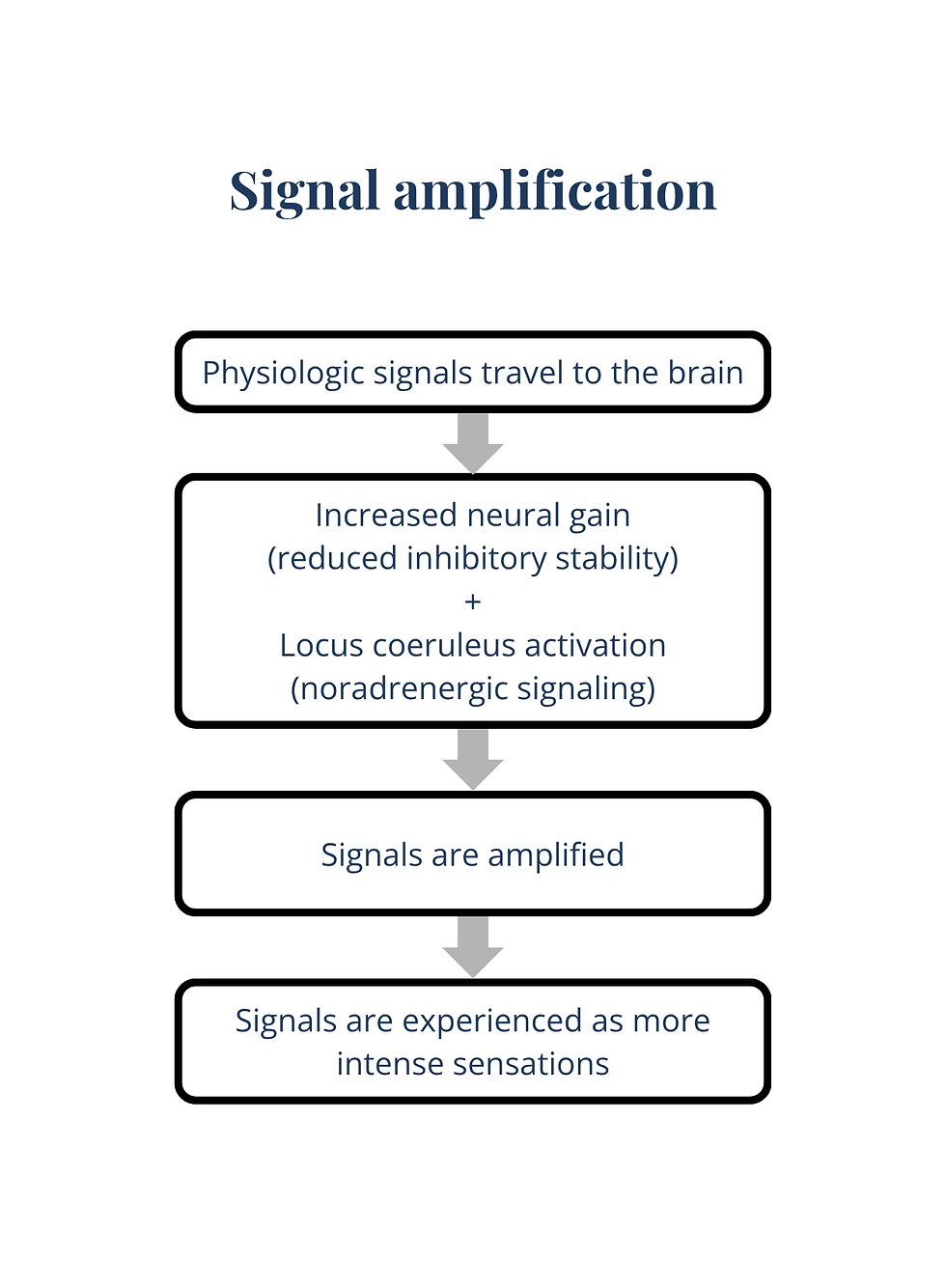
Figure 4. Signal amplification during withdrawal. When the brain’s calming systems are less stable, signals are less filtered and become amplified. Stress systems, such as the locus coeruleus, can further increase the intensity of these signals.
Looking Ahead
If signals can be amplified as they travel from the body to the brain, another important step remains.
How does the brain decide which signals enter awareness?
In the next article, we will explain how the brain determines which signals are experienced as symptoms.
Selected Scientific References
Nutt DJ, Malizia AL. New insights into the role of the GABA(A)–benzodiazepine receptor in psychiatric disorder. Br J Psychiatry. 2001;179:390–396.
Aston-Jones G, Cohen JD. An integrative theory of locus coeruleus–norepinephrine function: Adaptive gain and optimal performance. Annu Rev Neurosci. 2005;28:403–450.


