.png)
What Are Symptom Patterns?

Updated: 19 hours ago
Week 1 of the Symptom Patterns Series
Why withdrawal symptoms that seem scattered can appear together in recognizable patterns.
Recognizing the Experience
Many people in benzodiazepine withdrawal are overwhelmed less by any single symptom than by how many appear at once. Palpitations, muscle tension, burning sensations, dizziness, digestive changes, sound sensitivity, and internal restlessness may all be present in the same period, and often across very different parts of the body.
Because the symptoms come from so many systems, they can feel random and disconnected—as if several unrelated illnesses were developing at the same time.
New or changing symptoms always deserve appropriate medical evaluation. At the same time, during withdrawal these symptoms can appear together rather than only one at a time, in ways that can be recognized. Learning to recognize those groupings is what this series is about.
What Is a Symptom Pattern?
A symptom pattern is a recognizable way symptoms from different systems appear together. These patterns are provisional, overlapping, and are not diagnoses or fixed subtypes.
Within a withdrawal profile, several symptoms may be present during the same period and may involve more than one body system. When that organization is recognizable, we call it a symptom pattern.
In some patterns, symptoms linked to one regulatory system are especially prominent; in others, symptoms linked to several systems are more broadly represented. A pattern therefore sits somewhere between one isolated symptom and an undifferentiated list of whole-body complaints.
For decades, benzodiazepine-withdrawal symptoms have been listed and described in detail, but they have not been organized into a widely agreed classification. This series offers an exploratory way to describe their organization without turning that organization into fixed categories. Earlier series introduced the Five Axes and explained how individual symptoms are generated and experienced. This series asks how symptoms linked to those systems can appear within the same clinical picture.
Why Symptoms Can Appear in Patterns
Body and nervous-system functions are linked rather than isolated. During withdrawal, changes may involve several systems within the same period, so cardiovascular, muscular, digestive, sensory, and stress-related symptoms can occur alongside one another.
This makes a cross-system symptom picture biologically plausible. It does not mean that every symptom has the same cause, that every involved system becomes more active, or that an entire pattern rises and falls as one coordinated unit.
The next article will examine in more detail why symptoms involving different regulatory systems can appear together.
Connection to the Five-Axis Stress Biology Framework™
Within the five-axis educational framework, the five broad regulatory systems are CRH/Adrenergic Stress (Axis 1), Excitatory–Neuroinflammatory (Axis 2), Autonomic (Axis 3), Basal Ganglia–Cerebellar Motor (Axis 4), and Neuroimmune/Visceral Regulation (Axis 5).
A pattern is not one of these axes. The axes describe broad regulatory systems that can contribute to symptoms. A pattern describes how symptoms linked to several axes are organized within a person's current clinical picture.
Sometimes symptoms linked to one regulatory system are especially prominent, with symptoms linked to other systems alongside them. In other cases, the pattern is more broadly distributed. Recognizing that organization can add context that symptom-by-symptom—or axis-by-axis—tracking may miss.
Important Clarification
Symptom patterns are recognizable and potentially useful, but they are not rigid categories or fixed diagnoses.
A person may show features of more than one pattern at the same time, and the boundaries between patterns can overlap. Some people also reduce or stop benzodiazepines with few or manageable symptoms and never develop a severe multisystem presentation.
Recognizing a pattern does not prove that every symptom has the same cause, establish a diagnosis, or remove the need for appropriate medical evaluation. Its purpose is to make the experience more understandable—not to place a person in a box.
It can shift the question from "why do I have twenty unrelated symptoms?" to "which functions appear together in the current symptom picture, and what part of that picture is most prominent right now?"
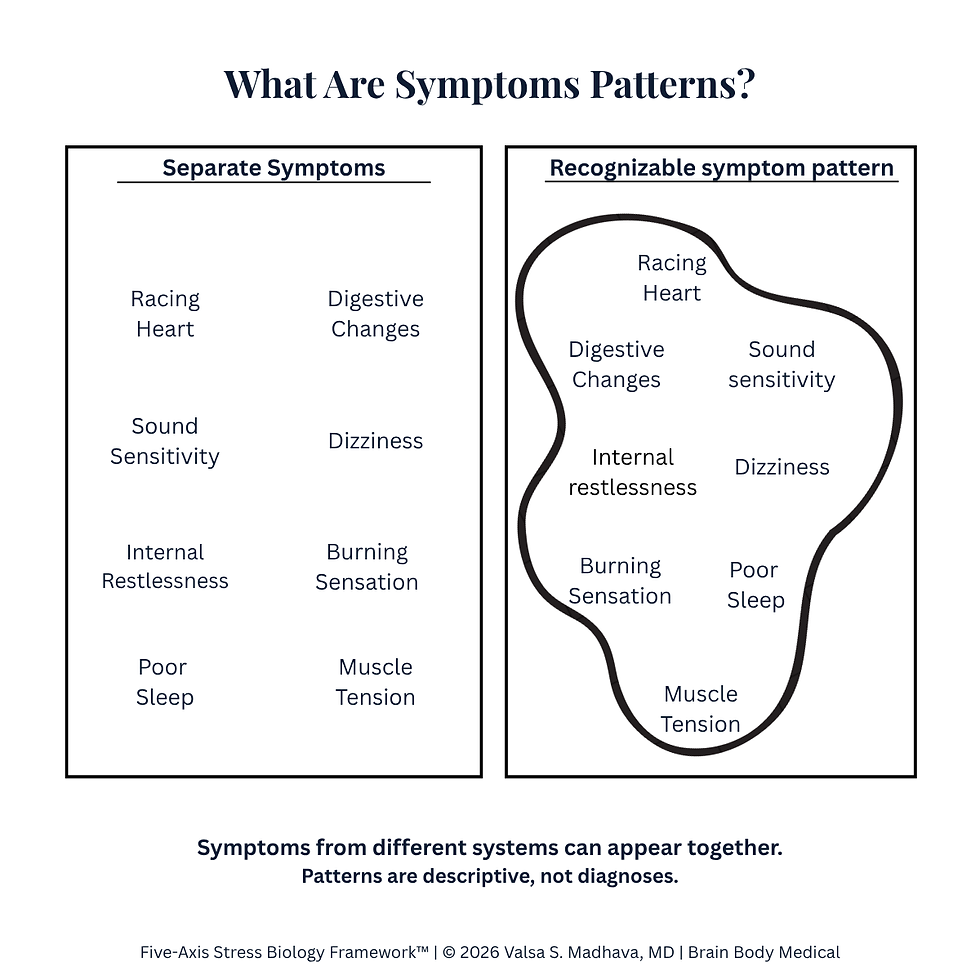
Figure 1. Scattered symptoms grouping into a recognizable pattern
Symptoms that seem to arise from different systems can appear within recognizable groupings. In some patterns, symptoms linked to one regulatory system are especially prominent; in others, symptoms linked to several systems are more broadly represented.
About the Evidence for This Series
Published withdrawal literature documents a broad, heterogeneous, multisystem symptom set, but no agreed classification. In the author's exploratory cross-sectional analysis of symptom reports from 39 people experiencing benzodiazepine withdrawal, symptom-severity profiles showed evidence of non-random, overlapping organization beyond overall symptom burden; the analysis did not establish fixed subtypes or show that symptoms rise and fall together within an individual over time, and it validates no particular named pattern.
The patterns described in this series are provisional interpretations informed by that analysis (in preparation for publication), published literature, the Five-Axis educational framework, and clinical observation. The research on benzodiazepine withdrawal comes from relatively few groups and has not yet been confirmed by separate, independent teams. Severe multisystem withdrawal is not universal.
These patterns are not diagnoses, do not establish a mechanism, do not predict an individual's course, and do not replace individual medical evaluation; no medication should be changed on the basis of them alone.
Selected Scientific References
Ashton, H. (1991). Protracted withdrawal syndromes from benzodiazepines. Journal of Substance Abuse Treatment, 8(1–2), 19–28. https://doi.org/10.1016/0740-5472(91)90023-4
Pétursson, H. (1994). The benzodiazepine withdrawal syndrome. Addiction, 89(11), 1455–1459. https://doi.org/10.1111/j.1360-0443.1994.tb03743.x
Shade, K. N., et al. (2025). Long-term neurological consequences following benzodiazepine exposure: A scoping review. PLOS ONE, 20(8), e0330277. https://doi.org/10.1371/journal.pone.0330277
The organizational analysis behind Series 4 is the author's own exploratory analysis of a 39-person symptom matrix, in preparation for publication and not yet posted or externally replicated.
Five-Axis Stress Biology Framework™ | © 2026 Valsa S. Madhava, MD | Brain Body Medical
For educational and clinical use only.